
News List
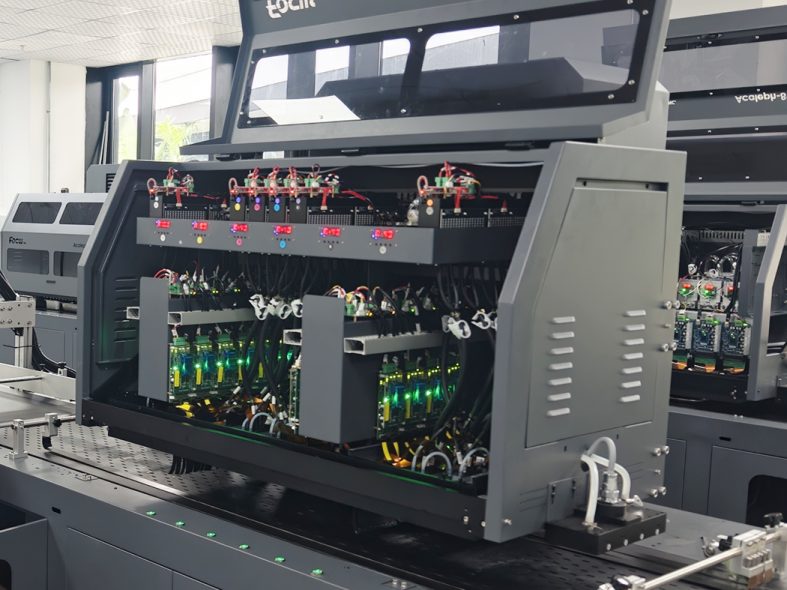
Many printing failures on PE film come from simple misunderstanding: “printing on plastic film is easy”. In actual industrial single-pass production, PE material features low surface energy, smooth texture and strong chemical inertia. It makes high-speed single-pass inkjet printing one of the most challenging processes in flexible packaging production. Among all influencing factors, UV ink selection is the core decisive factor.
Different from slow multi-pass digital printing, single-pass high-speed production can only rely on professional UV LED curing ink. Solvent-based and water-based inks cannot match ultra-fast line speed and instant curing requirements. Below are 7 industry-standard ink selection criteria for stable PE film single-pass printing.
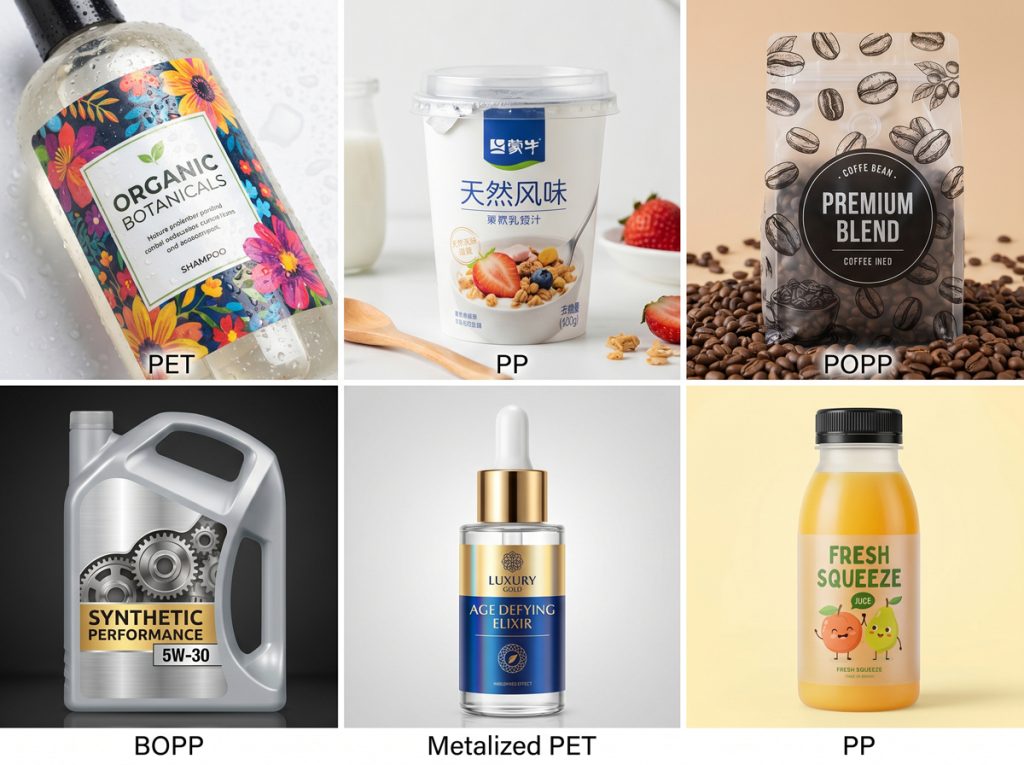
PE film must complete corona or plasma pre-treatment before printing. The surface dyne value needs to reach 42–46 dyn/cm. Qualified single-pass UV ink contains special adhesion-promoting resin. After 24-hour curing, the ink layer can pass standard 3M tape peeling test without falling off.
Single-pass production requires one-pass complete curing. The ink formula, photoinitiator system and pigment concentration must adapt to UV lamp power. Especially for high-opacity white ink, full curing without sticky residue ensures continuous high-speed operation.
Piezoelectric printheads require ink viscosity between 8–12 cP. Professional PE printing UV ink maintains stable viscosity at 40–45℃ working temperature. Its gentle temperature change curve avoids ink breakage and uneven spraying during long-time operation.
The ink surface tension is controlled at 25–32 mN/m, slightly lower than the treated PE surface energy. This design ensures perfect wetting and spreading, effectively eliminating shrinkage cavities and dot missing defects.
To protect precision single-pass printheads, ink pigment average particle size is ≤0.3 μm, with maximum particle below 0.5 μm. Cooperated with 1μm high-precision filtration, it fundamentally reduces printhead clogging risks in long-batch production.
After UV curing, the ink film elongation rate exceeds 150%. It perfectly adapts to PE film stretching, cutting and post-processing, improving scratch resistance and product durability for flexible packaging.
Nano-level grinding and low-impurity formula support wide gamut color output. Combined with ICC color management and linearization calibration, it achieves stable and high-density color performance for commercial packaging orders.
Professional ink matching is the first step to solve PE film printing difficulties. Our industrial single-pass UV printing solution fully optimizes ink formula and mechanical parameters for flexible film scenarios.
Check our professional single pass UV printing solution for flexible packaging film
A: Solvent and water-based inks dry too slowly. Only professional UV LED curing ink supports instant one-pass curing and high-speed continuous production.
A: Corona or plasma treatment is required to reach 42–46 dyn/cm surface energy for stable ink adhesion.
A: Ultra-fine pigment particles below 0.3μm and strict 1μm filtration effectively avoid nozzle blockage.
A: High elongation ink film adapts to PE film stretching and post-processing, preventing cracking and peeling.


Submit Request