
News List
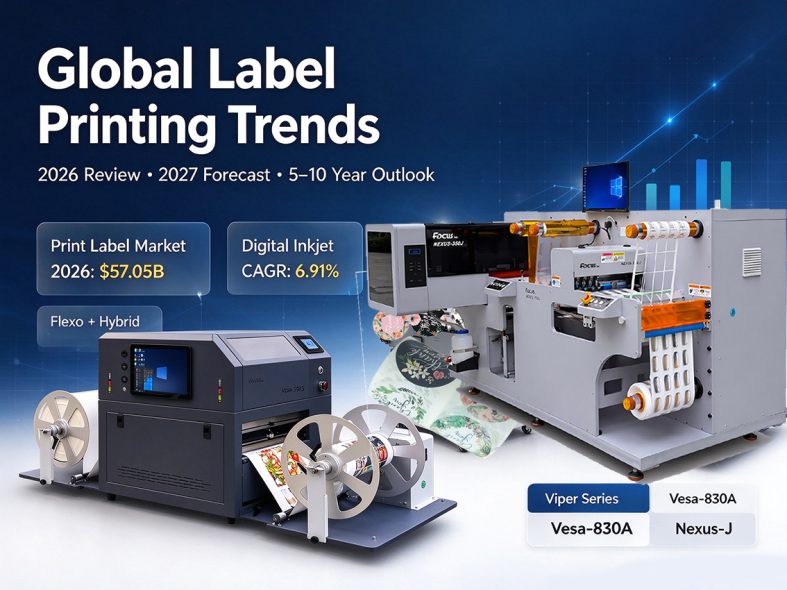
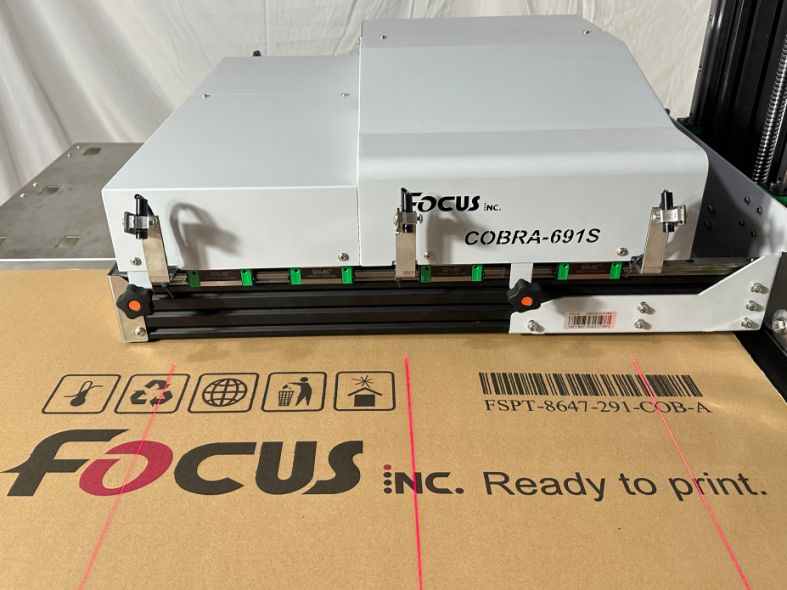
Investing in a roll-to-roll label printer is an important decision for any print shop or packaging converter. Selecting the wrong technology leads to either overpaying for capacity you never use, or being unable to produce the quality and substrates your customers demand.
Our label printer lineup covers four main configurations, each optimized for different business profiles and application needs.
| Model series | Technology | Max width | Primary substrates | Typical user profile | Integrated finishing |
| Viper-391S | Water-based single pass | A4 / A3 | Paper labels, coated stock | Small print shops, start-up label businesses | Optional digital die cut, slitter rewinder |
| Viper-391S Pro | Water-based single pass | A2 / A3 / A4 | Paper labels, medium volume | Medium label converters, in-house packaging teams | optional die cut & slitting |
| Vesa-830A | UV multi pass | Desktop format | Plastic film, shrink sleeves, small runs | Boutique brands, sample rooms, film proofing | Desktop UV curing, roll handling |
| Nexus-350J | UV multi color integrated | Industrial format | All label types including film | Professional label converters, high value labels | Lamination, die cut, matrix removal, slitting |
| S350 JetPress | UV single pass | 120mm / 215mm / 330mm | All label types including film | Professional label converters, high value labels, high volume productivity | Lamination, die cut, matrix removal, slitting |
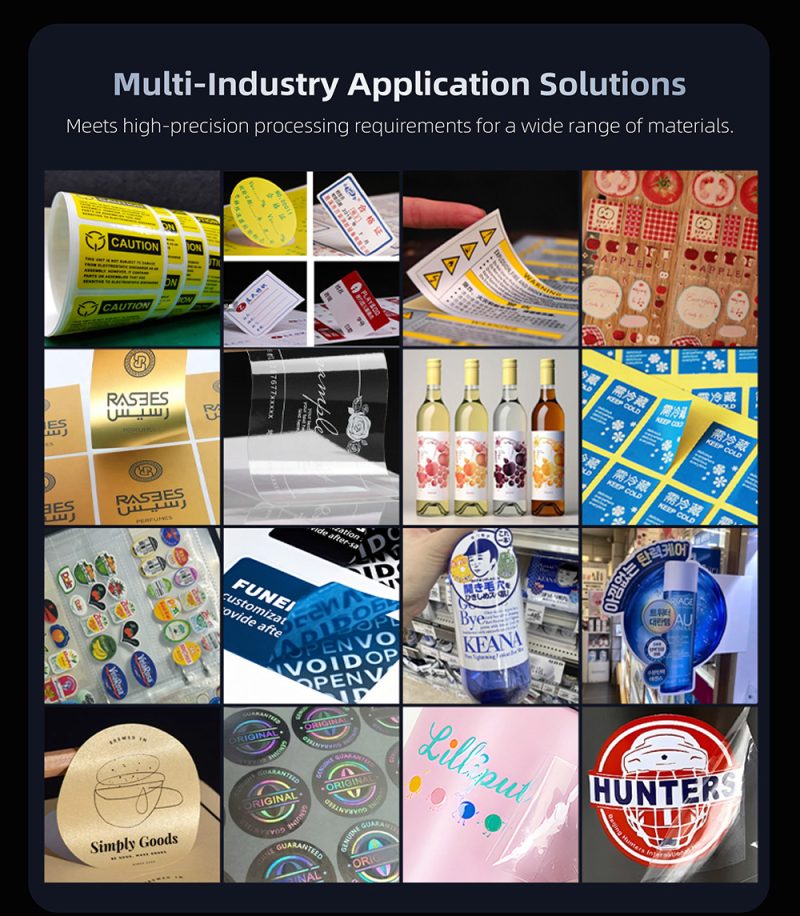
First, substrate type. If you work primarily with paper and coated labels, water-based single pass systems offer the best speed and cost efficiency. If you print mostly plastic films and shrink materials, UV technology is required.
Second, production volume and run length. Single pass systems deliver much higher speed for medium to large runs. Multi pass UV systems offer higher resolution and substrate versatility at lower production speeds, better suited for short run premium work.
Third, finishing requirements. If you need finished ready-to-use label rolls, integrated systems with die cutting and slitting eliminate the need for separate finishing equipment and extra labor.
All our systems include factory-calibrated ink formulations validated for the specific print engine and intended applications.
Applicability boundary: This guide provides general selection principles. For specific application requirements, material testing and production simulation are always recommended.
If you would like a personalized model recommendation based on your typical jobs, you can share your production details with our team for a tailored proposal.
A: The Viper-391S desktop water-based single pass printer is the most common starting point for paper label start-ups.
A: Yes. Water-based ink does not adhere reliably to non-porous plastic films. UV technology is required for dependable film label printing.
A: Single pass prints the full image in one pass for high speed. Multi pass scans back and forth for higher resolution but lower production speed.
A: Many models support optional add-on die cutting and slitting modules. Check specific model compatibility for upgrade options.



Submit Request