Home / News / Industry News / Global Label Printing Trends: 2026 Review, 2027 Forecast & 5–10 Year Industry Outlook
The global printed label industry is undergoing a sustained structural transition. It is shifting from analog flexographic dominance to a hybrid flexo + digital inkjet ecosystem. This piece provides a grounded review of 2026 market performance, a targeted forecast for 2027, and a 5–10 year outlook for converters evaluating digital label printing machines.
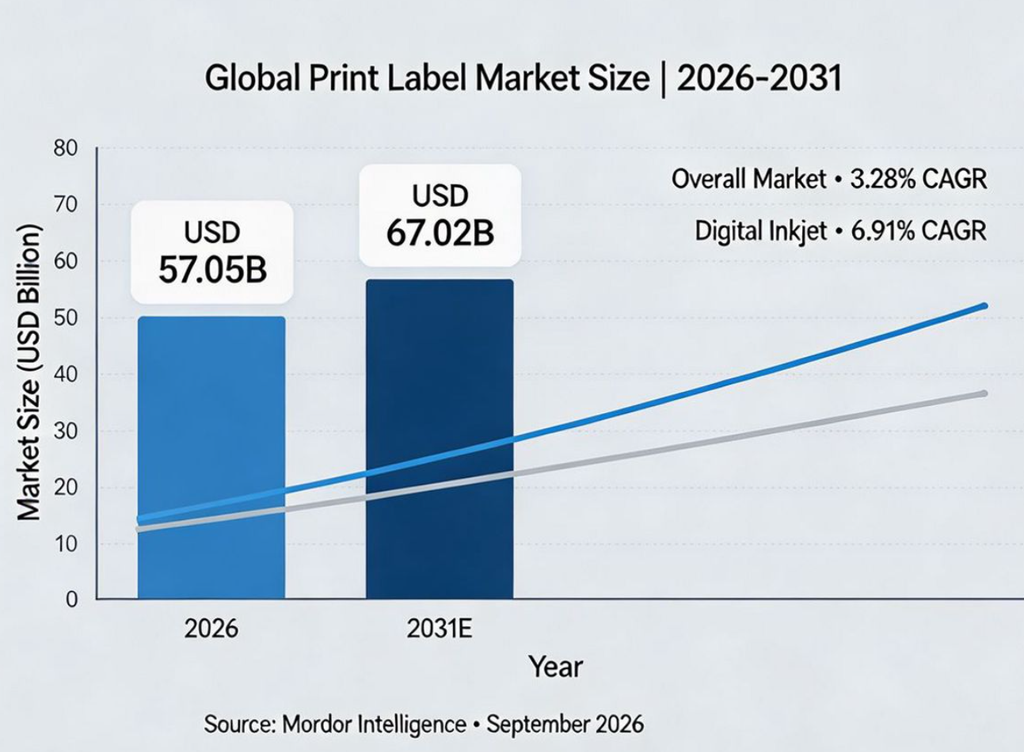
Data note: Market figures cited are sourced from Mordor Intelligence, Print Label Market report (updated Sep 2026).
2026 Market Review: What Defined This Year
The global print label market is valued at USD 57.05 billion in 2026, rising from USD 55.24 billion in 2025. The overall market will grow at 3.28% CAGR from 2026 to 2031. Flexography still holds the largest installed capacity share. Digital inkjet remains the fastest-growing technology segment, with a forecast 6.91% CAGR through 2031.
Three demand drivers stood out in 2026, and all directly change how buyers choose label printing equipment:
SKU proliferation & limited-edition launches: FMCG, cosmetics and beverage brands keep expanding regional variants and seasonal packs. This pushes converters to accept shorter runs. Flexo plate and setup costs become uneconomical for jobs below 3,000–5,000 linear meters. For this segment, roll-to-roll single-pass digital label machines deliver agility flexo cannot match.
Mandatory traceability and serialization: Pharmaceutical, food and regulated sectors continue rolling out unique serial codes and QR traceability. Digital inkjet label printing machines support inline variable data. They remove slow, error-prone secondary coding stations.
Sustainability pressure: Brands push for just-in-time label production to cut inventory and makeready waste. Digital label printers eliminate plate waste and reduce setup scrap. This aligns with carbon and waste reduction targets.
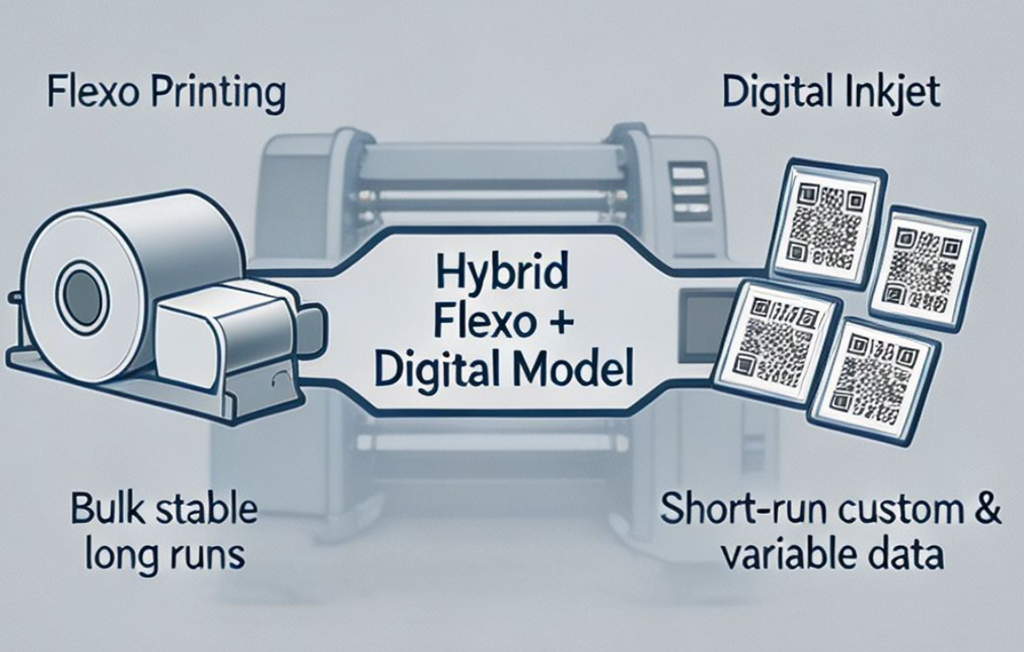
Flexo retains its core advantage for stable long runs above 10,000 linear meters, where its low unit ink cost stays competitive. Most converters now build a mixed fleet: flexo for mass baseline orders, digital label machines for flexible short-run work.
2027 Short-Term Forecast: Key Shifts to Watch
For 2027, the market is expected to continue the same directional shift, with acceleration in three areas that directly impact machine purchasing decisions:
Digital adoption among mid-tier converters: 2027 will see more mid-size label shops add single-pass water-based or multi-pass UV roll-to-roll printers. Digital capacity will no longer belong only to large premium converters. Desktop entry models and industrial web-guided production models will both see rising inquiry volume.
Film & shrink sleeve digital expansion: UV inkjet for BOPP, PET and shrink sleeves will become a mainstream add-on service. It will no longer serve only as a niche proofing tool. This drives demand for UV multi-pass label printing machines built for non-porous substrates.
Inline finishing demand surges: Print + laminate + digital die-cut + slitting all-in-one label systems will gain more traction. Labor cost pressure pushes converters to reduce multi-step handling. Integrated lines cut separate finishing investment and operator workload.
The break-even line between flexo and digital will slowly creep upward. More 3,000–8,000 m medium runs will become viable for digital, as ink cost and press throughput improve.
5-Year Outlook (2026–2031): The Hybrid Era
Over the next 5 years, the industry will not see digital replace flexo. Instead, the standard business model will become hybrid flexo + digital:
Digital inkjet’s share of the label print value pool will keep expanding year over year. Single-pass aqueous roll-to-roll printers will dominate high-speed paper label work. Multi-pass UV machines will dominate film, shrink sleeve and high-value decorative labels. Integrated inline finishing lines will become a standard product category for digital label presses.
Regional divergence will also widen. Asia-Pacific remains the largest and fastest-growing regional market. Europe and North America lead on compliance-driven serialization and low-migration ink requirements. Buyers in different regions prioritize different machine configurations accordingly.
10-Year Long-Term Outlook (to 2036)
Looking 10 years ahead, the core dividing line will no longer be “flexo vs digital”. It will shift to production workflow architecture.
Workflow architecture reshapes factory design
Legacy standalone flexo presses will still serve ultra-long-run base volumes. Converters will build most new factory capacity around digital-first production cells. These cells will include automatic job nesting, cloud variable data workflow, and inline converting.
Two tech trends reshape machine purchasing
Two longer-term technology trends will reshape how buyers select label printing machines:
Ink formulation maturity: Water-based single-pass systems will expand beyond paper substrates. Low-migration UV for indirect food contact will also become more standardized.
AI pre-press & quality inspection: Closed-loop color control, barcode verification and defect inspection will become native on new digital label lines. This will reduce operator skill dependency.
For label converters, the most sustainable equipment strategy stays layered: desktop digital printers for sampling and ultra-short runs, single-pass aqueous machines for high-speed paper labels, integrated UV lines for film and premium decorated jobs, paired with flexo for large-volume baseline orders.
Applicability boundary: Forecasts are industry consensus projections. Actual regional adoption speed depends on local labor cost, substrate availability, regulatory rules and brand order mix.
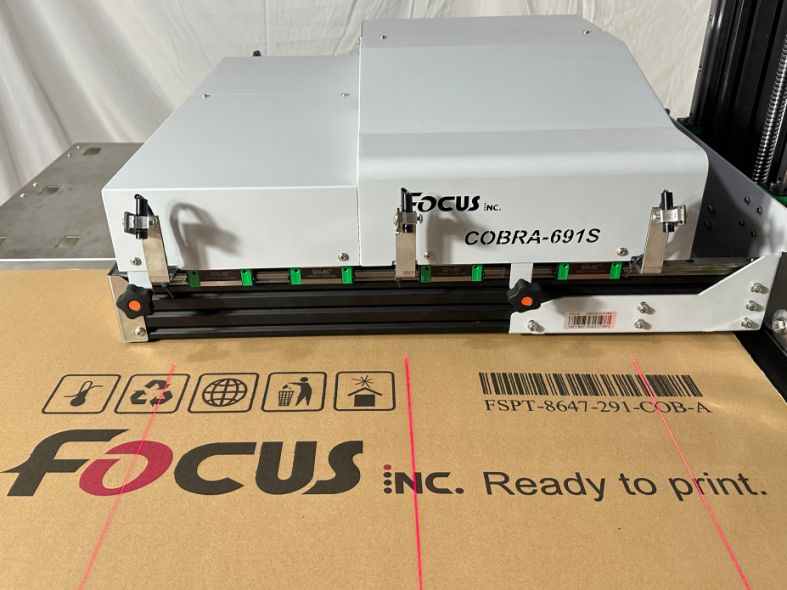
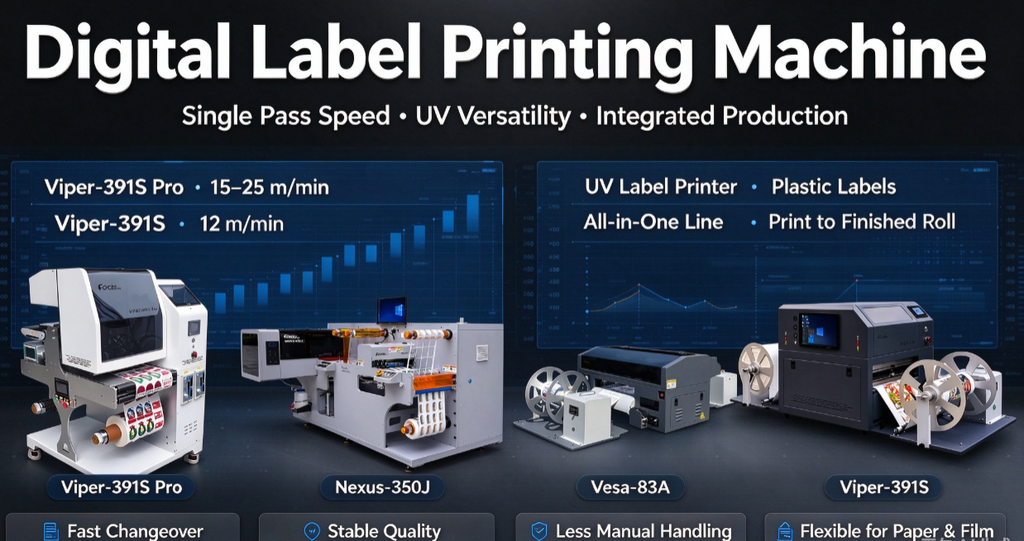
If you are evaluating adding digital roll-to-roll label capacity to your shop, our team can map your typical run lengths and substrate mix to FocusInc.'s Viper-391S / PRO, Vesa-830A and Nexus-350J series configurations and share sample printing.
Q: Will digital label printing machine replace flexo press in the next 5–10 years?
A: No. Flexography will remain the lowest-cost option for large stable runs. The industry will evolve into a hybrid model where digital label printers handle short-run, variable-data and fast-turn jobs.
Q: What is the fastest-growing segment for label printing equipment?
A: Digital inkjet label printing machines are the fastest-growing equipment category, driven by SKU expansion, serialization and short-run demand.
Q: What label printing trends will dominate 2027 for machine buyers?
A: Wider adoption of roll-to-roll digital label printers, UV digital shrink sleeve production, and inline all-in-one print-finish label lines are the main 2027 trends for equipment investment.
Q: What is the global printed label market size in 2026?
A: Per Mordor Intelligence (Sep 2026), the global print label market is estimated at USD 57.05 billion in 2026, growing at 3.28% CAGR to 2031. Other research houses use different scopes and report different figures.
Q: Which digital label printing machine is best for long-term investment?
A: Single-pass aqueous systems fit high-speed paper label volume; multi-pass UV integrated lines fit film, shrink sleeves and premium decorative labels. Most converters eventually build both types of capacity.